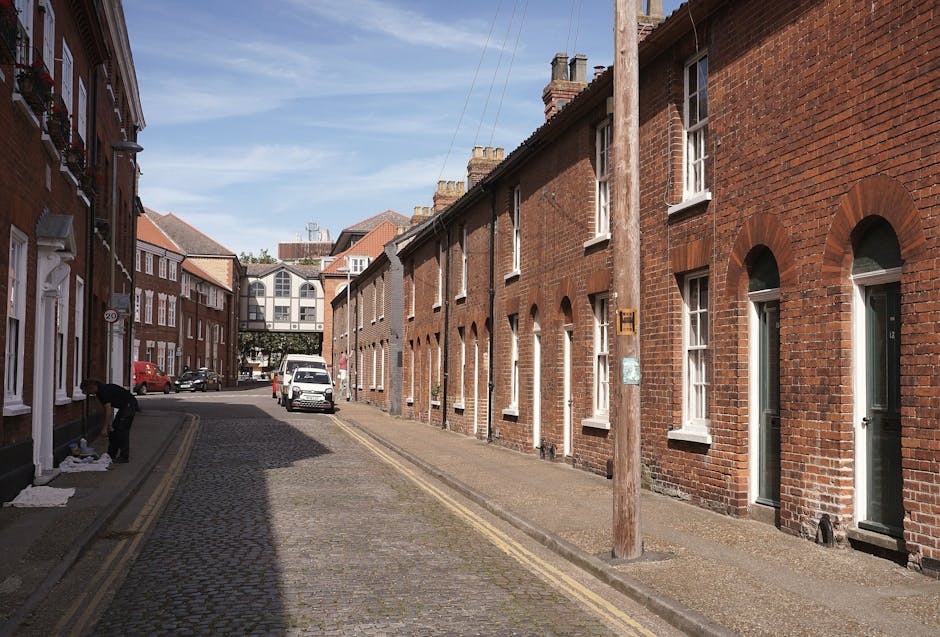
Guildford GU1 Removals Guide for Narrow Streets and Parking
If you are moving in Guildford GU1, chances are the hardest part is not lifting boxes. It is the streets. Tight corners, limited stopping space, busy periods, permit worries, and the general "where on earth can the van go?" moment can make a straightforward move feel awkward fast. This Guildford GU1 removals guide for narrow streets and parking is here to help you plan around those realities without overcomplicating things.
Whether you are moving from a flat near the town centre, a family home on a narrow residential road, or a small office with awkward access, the key is simple: plan access before moving day, not during it. In the sections below, you will find practical steps, common mistakes, and local-minded advice that can save time, reduce stress, and prevent those little problems that snowball by 9:15 in the morning.
Expert summary: in tight Guildford streets, good removals come down to three things - vehicle choice, parking planning, and load-out strategy. Get those right and everything else becomes much easier.
Why Guildford GU1 removals guide for narrow streets and parking Matters
GU1 has the kind of street layout that can look perfectly manageable on a map and then feel completely different once a van arrives. A road may be legal to stop on for a moment, but still unsuitable for a larger removal vehicle. Another street might be fine for a small van but awkward for loading heavier furniture. That is why local knowledge matters so much.
Narrow streets create a few very specific risks. First, the van may not be able to park directly outside the property. Second, moving items from a remote parking spot adds time, distance, and manual handling. Third, blocked access can upset neighbours and create avoidable tension. Let's face it, nobody wants to be apologising to three people before breakfast.
Parking is just as important as access. In some moves, the issue is not whether the vehicle can fit. It is whether it can wait long enough to load safely without causing disruption. On a busy day, even a small delay with parking can mean missed lift bookings, rushed handling, or extra trips.
For many moves, the street itself is part of the logistics plan. That sounds obvious, but it is easy to forget when you are focused on packing. If you are moving a flat, office, or family home in Guildford town centre, parking and access planning should be treated as part of the move, not as an afterthought.
How Guildford GU1 removals guide for narrow streets and parking Works
The process is simpler than people expect, but it works best when you break it into stages. In practical terms, a well-run GU1 removal starts with assessing the property access, then matching the vehicle to the job, and then planning how loading will happen on the day.
Here is the basic flow:
- Check the property access. Look at road width, turning space, pavement width, steps, entry points, and whether another car could block the front door area.
- Choose the right vehicle. A compact van, a medium van, or a larger removal vehicle each has its place. Bigger is not always better in GU1.
- Plan parking and stopping points. Think about how close the vehicle can realistically get to the door and whether loading will need a short carry.
- Pack with access in mind. Heavy boxes, fragile items, and awkward furniture should be grouped so the team can load in the right order.
- Leave a margin for delay. Parking in a busy area can take longer than expected. A little flexibility helps a lot.
In our experience, the smoothest moves are not the ones with the fewest obstacles. They are the ones where the obstacles were already expected. That is a big difference. A crew that knows it may need a second parking option, a trolley, or a shorter loading window will move more calmly and usually more efficiently.
If your move involves a flat, it can also help to look at flat removals options, especially where stairs, shared entrances, or tight communal areas make access trickier than usual.
Key Benefits and Practical Advantages
Good access planning does more than reduce stress. It improves the whole move from start to finish.
- Less waiting time: if the vehicle is positioned sensibly, loading starts sooner and finishes sooner.
- Lower handling risk: shorter carrying distances mean fewer bumps, scrapes, and heavy awkward lifts.
- Better neighbour relations: keeping disruption tight and efficient makes a real difference in residential streets.
- More accurate scheduling: when the access plan is realistic, the move runs closer to the planned time.
- Smarter vehicle choice: you avoid paying for unnecessary vehicle size or struggling with one that is too large for the street.
There is also a less obvious benefit: calmer decision-making. When parking is sorted, people stop improvising. And improvising is where removals go wrong. One minute you are happy, the next you are carrying a wardrobe around the block while someone shouts "just hold it there a second."
For some customers, the right answer is a flexible man and van service. For others, a fuller removals setup is the better fit, especially if there are multiple loads, bulky items, or limited windows for roadside parking.
Who This Is For and When It Makes Sense
This guide is useful for anyone moving in GU1, but it is especially relevant in a few situations.
- Flat movers: if you are in upper floors, shared buildings, or narrow entryways.
- Home movers: if your street is tight, parked-up, or difficult to turn in.
- Students: if you are moving in or out with a small vehicle and a short time window.
- Office movers: if the building has loading restrictions or limited roadside access.
- Anyone with heavy or awkward items: pianos, wardrobes, large sofas, and office furniture all need a bit more planning.
It also makes sense if you are moving on a weekend or at a busy time of day. Even when the road looks quiet at 7 a.m., things can change quickly by late morning. A delivery van appears, a neighbour returns, someone has a bin out. Small things, but they matter.
If your move is a one-off smaller job, comparing man with a van and a more structured removal services approach can help you choose the right level of support. If you are moving a student room or studio, have a look at student removals for a more tailored approach.
Step-by-Step Guidance
Here is a practical way to handle a Guildford GU1 move where narrow streets and parking are part of the equation.
1. Measure the access properly
Do not just glance at the street and assume it will be fine. Check where a van could stop, whether cars usually park on both sides, and how much room there is around corners. If a large vehicle cannot swing in without blocking the road, that matters.
2. Speak honestly about the property
If you are booking a removals team, explain the awkward bits. Is there a steep slope? Is the entrance around the back? Are there bollards, low trees, or a shared courtyard? These details help the crew bring the right equipment and plan the right approach.
3. Choose the right vehicle size
Smaller can be better in GU1. A compact or medium van may be easier to park, easier to manoeuvre, and faster for short urban moves. A bigger vehicle can still be useful, but only if the access and stopping space genuinely suit it.
4. Reserve a parking plan, not just a vehicle
Think through where the van will wait, where it can load safely, and whether there is a backup spot if the first one is taken. If needed, a mover may ask you to keep a space clear or coordinate the timing around the arrival window. That coordination is not glamourous, but it is worth its weight in cardboard.
5. Pack for efficiency
Put heavy items in sensible boxes, label fragile items clearly, and keep essentials separate. If the crew has to keep walking back and forth because the boxes are mixed up, the job takes longer than it needs to. Good packing also pairs well with packing and boxes support when you want a more organised start.
6. Load in the right order
Items that come off first should usually go on last, and vice versa. That sounds obvious, but in tight parking situations it becomes even more important. You do not want to open a van and find the kettle buried behind the sofa, unless you enjoy mild chaos.
7. Leave a buffer
Parking delays happen. Traffic happens. A delivery driver stops in the only sensible loading spot. Build in some breathing room so one hiccup does not derail the whole day.
Expert Tips for Better Results
These are the small things that often make the biggest difference.
- Photograph the street: a few clear pictures of the front of the property, the nearest junction, and the parking area help with planning.
- Pick an early slot: mornings are often easier for access before the road gets busier.
- Use temporary labels on boxes: room-by-room labels speed up unloading when parking is tight and time on the pavement is limited.
- Keep pathways clear: bins, bikes, and planters can create a much bigger issue than people expect.
- Know your heaviest item: if there is one awkward sofa or a piano, mention it early. Better early than on the doorstep.
If your move includes delicate or unusually heavy items, it may be worth reviewing piano removals or furniture removals support before the day arrives. Heavy items and narrow streets are a poor combination if nobody has planned the route.
One-line reality check: the more awkward the access, the more valuable the planning.
Common Mistakes to Avoid
Most moving headaches in narrow streets come from a handful of predictable mistakes.
- Assuming a van can park outside: sometimes it can, sometimes it really cannot.
- Underestimating carry distance: a short walk in your head can feel endless with a wardrobe in real life.
- Booking the wrong vehicle size: too big and the vehicle struggles; too small and the move needs extra trips.
- Ignoring neighbour traffic: other residents still need access, and yes, they will want to use it.
- Packing without a loading plan: random box piles make the move slower and more stressful.
- Leaving everything to the final hour: on moving day, the last hour is usually where small problems become annoying ones.
A quieter mistake is not checking service scope. Some people only need a light-load solution, while others would benefit from a more complete package such as home moves or house removals. Choosing well matters more than choosing quickly.
Tools, Resources and Recommendations
You do not need fancy kit to make a Guildford GU1 move work well. A few practical tools and habits are enough.
- Tape measure: useful for checking furniture width, hallway clearance, and stair turns.
- Floor plan or rough sketch: handy when deciding where things should go at the new property.
- Box labels and marker pens: basic, but very effective.
- Protective covers and blankets: useful for keeping items clean and reducing knocks.
- Phone photos of access points: one of the simplest ways to communicate a tricky street setup.
From a service standpoint, it helps to choose a provider that can match the move to the right vehicle and team. That may be a removal van, a larger moving truck, or a short-notice same day removals arrangement if timing becomes tight.
If you need somewhere to keep items while access is being sorted or dates do not line up neatly, storage can take the pressure off. That is especially useful when one property is ready and the other is not quite there yet.
Law, Compliance, Standards, or Best Practice
For most readers, the important point is not legal theory. It is practical compliance and safe working practice. In the UK, moving in a public road should be handled with care, especially where parking, obstruction, and pedestrian access are concerned. Councils may have local parking rules, loading restrictions, or permit requirements, so it is sensible to check the position early rather than assume it will be fine.
Best practice usually includes the following:
- keeping access clear for residents and emergency vehicles where possible;
- avoiding unnecessary obstruction on narrow streets;
- lifting and carrying items in a way that reduces injury risk;
- using the right equipment for heavier or awkward items;
- being honest about access limitations before the move starts.
Insurance and safety also matter. Any mover you choose should be able to explain how goods are handled, what is covered, and how risks are managed. If you want to understand that side better, review insurance and safety information and the company's health and safety policy. Those pages are not glamorous, true, but they are the sort of detail that quietly protects your day.
For customers comparing providers, it is also reasonable to look at transparent pricing and quotes, along with clear terms and conditions. That way, you know what is included before anything starts rolling.
Options, Methods, or Comparison Table
Here is a practical comparison of common approaches for narrow-street moves in GU1.
| Option | Best for | Strengths | Possible drawback |
|---|---|---|---|
| Small van / compact setup | Tight residential roads, small flats, limited parking | Easier to park, easier to manoeuvre, often faster in crowded streets | May need more trips for larger loads |
| Standard removals vehicle | Typical house moves, mixed furniture, moderate access | Balanced capacity and efficiency | Can be awkward on very narrow streets |
| Larger moving truck | Bigger homes, multi-room moves, lots of furniture | Can reduce the number of trips | Harder to position in constrained parking areas |
| Flexible man and van | Smaller or quicker moves, student loads, short distances | Adaptable, often ideal where access is tricky | Not always the best choice for full-house loads |
The right answer depends on your exact street and what you are moving. There is no prize for choosing the biggest vehicle. Honestly, in GU1 that can sometimes be the least sensible choice.
Case Study or Real-World Example
Picture a small two-bedroom flat move in GU1 on a narrow road where cars park on both sides. The occupants had a sofa, a dining table, several boxes, and a couple of fragile lamps. On paper, it seemed simple. In reality, the van could not sit directly outside the front door for long.
The solution was straightforward, but only because it was planned early. The movers used a smaller vehicle, arrived at a quieter time, and loaded in sections so the team did not block the street longer than necessary. Fragile items were grouped together, the sofa was taken first, and the boxes were labelled by room. No drama, no shouting, no awkward half-hour waiting for a gap in traffic.
What made it work was not speed. It was coordination. The street still felt tight, because it was tight. But the move felt controlled, which is what you want. After all, a move in a narrow street is rarely about perfection. It is about reducing friction wherever you can.
Practical Checklist
Use this checklist before moving day. It is basic, but it catches a lot of problems early.
- Measure entrances, hallways, stair turns, and larger furniture pieces.
- Check whether the van can park or stop safely near the property.
- Take photos of the front of the house or building and the street outside.
- Tell the mover about steep access, tight turns, shared entrances, or rear loading points.
- Decide whether a smaller van or a larger vehicle suits the street better.
- Label boxes by room and note anything fragile or heavy.
- Clear bins, bikes, and other obstacles from pathways.
- Allow extra time for parking and loading.
- Check whether you need storage between move dates.
- Confirm insurance, safety approach, and terms before the move begins.
Quick tip: if you are moving from a flat or a compact home, combining packing and unpacking services with a well-sized vehicle can make the whole day feel much less hectic.
Get a free quote today and see how much you can save.
Conclusion
Moving in Guildford GU1 is absolutely manageable, even with narrow streets and parking pressure, but it rewards preparation. The more carefully you think about access, the less likely you are to run into delays, strained carrying, or unnecessary stress on the day. That is really the heart of this guide.
Choose the right vehicle. Plan the parking. Pack sensibly. Keep neighbours and street access in mind. Simple, yes. Easy to forget, also yes. But if you follow those basics, your move has a much better chance of feeling organised rather than chaotic.
And if your move involves a home, flat, office, or specialist item, it helps to work with a team that understands the local realities and treats access planning as part of the service, not a side issue. Small details matter here. They always do.
With the right plan, even a tight Guildford street can become just another part of the day - not the whole story.
Frequently Asked Questions
Can a removal van park on narrow Guildford GU1 streets?
Sometimes yes, sometimes no. It depends on the street width, parking layout, and whether nearby vehicles are already occupying the best stopping points. A smaller van is often easier to position than a larger vehicle.
How do I know if I need a small van or a larger removals vehicle?
Look at both the amount you are moving and the access at the property. If the street is tight, a smaller vehicle may be more practical even if it means a slightly longer loading plan. Bigger is not automatically better.
What should I tell my removals team about parking?
Tell them where the property sits on the street, whether parking is usually available outside, any restrictions you know about, and whether there are bollards, loading bays, or awkward corners nearby. Photos help a lot.
Is it better to move early in the day in GU1?
Usually, yes. Early starts can be easier because roads are often quieter and parking is less contested. That is not a hard rule, but it is a sensible default for narrow streets.
What if the van cannot park outside my property?
Then the move simply needs to be planned around a short carry. That may mean using trolleys, loading from a nearby legal space, or allowing extra time. It is common enough in urban moves.
Do I need to reserve parking for a house move?
Not always, but it is worth checking whether local parking controls or nearby traffic patterns could cause problems. If you have a very narrow street, the safer option is to plan parking well in advance.
How can I reduce the time spent loading on moving day?
Pack clearly, label boxes, place heavy items near the exit, and keep pathways open. The less time the team spends figuring out what goes where, the smoother the move will be.
Are flat removals harder in narrow streets?
They can be, especially if there are stairs, shared hallways, or limited parking. A good flat move depends on both internal access and street access, so it is worth planning both sides carefully.
What if I need temporary storage between move dates?
Storage can be a very practical solution if keys, completion times, or access windows do not line up neatly. It removes pressure and stops you trying to force a same-day solution where one does not really exist.
How far in advance should I book a move in GU1?
The earlier the better, especially if you know the street is tight or parking is limited. Early booking gives more time to plan the vehicle, check access, and avoid a rushed arrangement.
Can a man and van service handle difficult parking?
Yes, often very well, particularly for smaller loads or shorter moves. A flexible vehicle size can be a big advantage in narrow streets, provided the load itself suits the setup.
What is the biggest mistake people make with parking on moving day?
Assuming there will be space right outside the door. That is the mistake that catches people out most often. A backup plan is worth having, even if you never need it.